


Heating Service in Springfield, IL
Reliable seasonal heating service in Springfield, IL from Allied Plumbing Heating & Cooling keeps your system running strong. Schedule expert service today.
Solving Common Heating Problems in Your Home
That sudden, shocking spike in your Ameren utility bill, the specific room that never gets warm no matter how high you crank the thermostat, or the loud bang echoing from the basement every time the system kicks on—these are clear signals that your furnace is struggling. These aren't just minor annoyances; they mean your heating equipment is working harder than it should to fight off the deep Central Illinois cold, costing you more money and compromising your daily comfort. Allied Plumbing, Heating & Cooling has experienced technicians in Chatham neighborhoods every day, ready to diagnose these exact issues and restore reliable heat to your home.
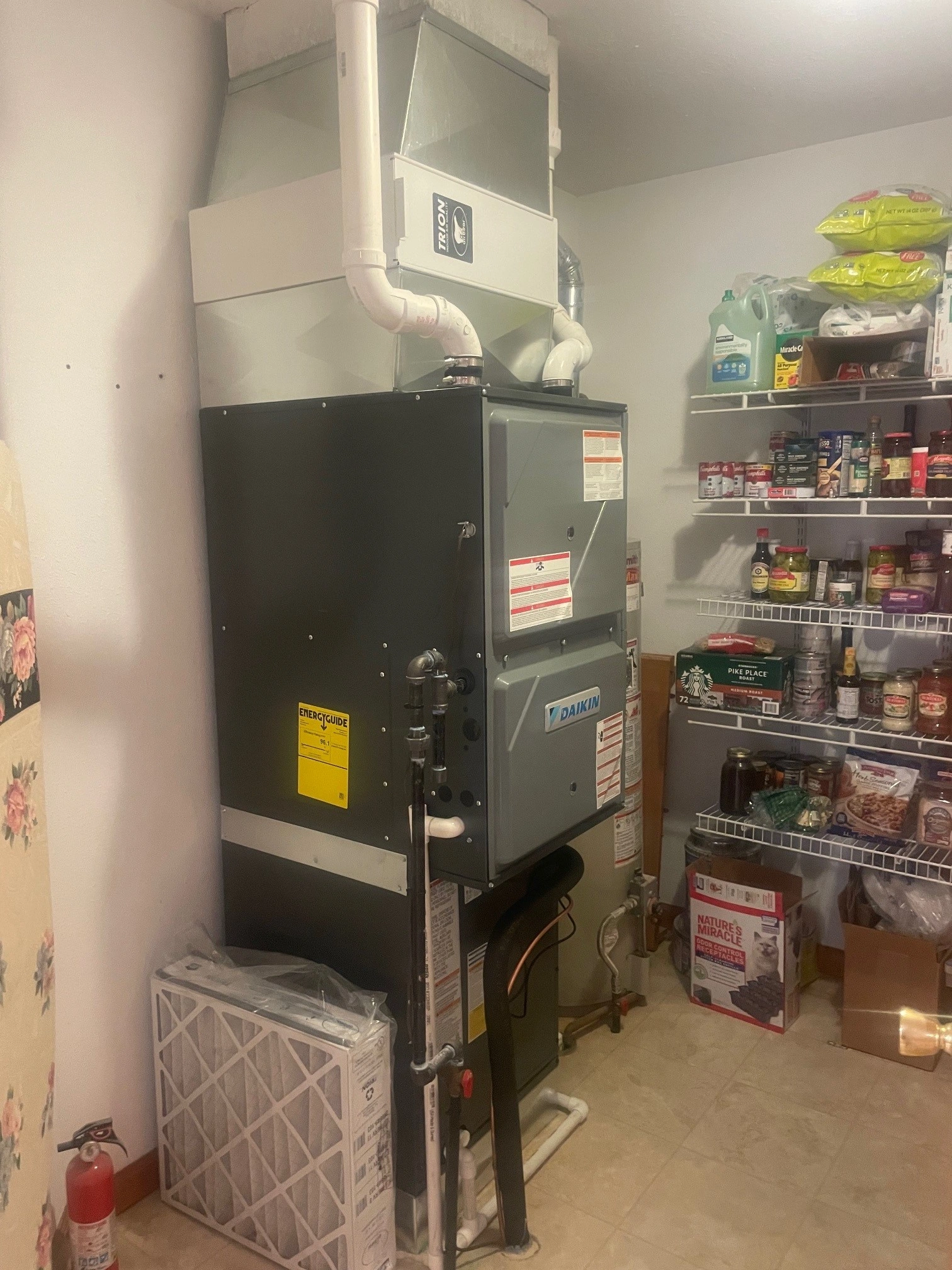
Key Indicators That Your System is Overdue for a Tune-Up
Recognizing the early warning signs of system fatigue can save you from a complete breakdown during the hottest or coldest days of the year. If you are experiencing any of these issues, your equipment is crying out for professional attention.
Steadily Climbing Utility Bills
You might find yourself surprised by your power or gas bill each month, even when your thermostat settings haven't changed at all. The cost to heat and cool your home is noticeably higher than it was at this exact same time last year. This is a classic, undeniable sign of declining mechanical efficiency.
As internal parts wear down and coils get dirty, your system has to run longer and work significantly harder to produce the exact same amount of conditioned air. Ignoring this efficiency drop means you are essentially paying a monthly penalty in wasted energy. A professional tune-up can restore much of that lost efficiency, frequently paying for itself through immediate energy savings.
Poor Indoor Air Quality and Excessive Dust
You might notice a thick layer of dust settling on your furniture just a day or two after you finish a deep cleaning. Family members with allergies often complain that their symptoms seem significantly worse inside the house, particularly during the heavy spring planting and fall harvest seasons.
In our heavily agricultural area, pollen, field dust, and debris are constantly being pulled toward your outdoor and indoor units. A heavily clogged filter and dirty internal components cannot effectively capture these microscopic particles, causing the system to recirculate them repeatedly throughout your living spaces. This not only impacts your family's daily comfort but forces the blower motor to strain, risking premature failure.
Strange Mechanical Noises
You turn on the system and hear new, jarring sounds you don't recognize—a grinding, squealing, or violent rattling noise when the fan kicks on or shuts off. These noises are never normal and almost always indicate that a moving part is experiencing severe friction or is about to break entirely.
A loud squeal typically points to a failing belt or bearings that have completely lost their lubrication. A rattling noise might indicate a loose internal component that is currently bouncing around inside the metal cabinet, threatening to damage other fragile parts. These are urgent mechanical warning signs that require immediate intervention before they cause a catastrophic failure.
Unfamiliar and Persistent Smells
Perhaps you smell a dusty, burning odor the first few times you turn on the heat for the season, or a lingering musty scent that comes through the vents when the air conditioning runs. While a brief burning smell in late fall can just be dust burning off the heat exchanger, a persistent odor signals a much deeper issue.
A lasting electrical burning smell can indicate a severely overheating motor or melting wiring, which is a significant fire hazard. A musty, dirty sock smell points to moisture trapped in the system, usually biological growth on the indoor coil or a clogged condensate drain line. Cleaning out these contaminants is a core part of restoring your home's air quality.
Uneven Heating or Cooling
Some rooms in your house always feel perfectly comfortable, while a bedroom at the end of the hall feels like a sauna in July and an icebox in January. No matter how you adjust the vents, you simply cannot get an even temperature spread across your floor plan.
This frustrating imbalance is often caused by dirty coils that severely restrict airflow, a blower fan that is failing to push air at the proper speed, or minor ductwork issues. An unbalanced system is an incredibly inefficient system because it forces you to over-cool the main living areas just to make that one distant bedroom barely tolerable.
Constant System Cycling
You notice that your system turns on, runs for only five minutes, shuts down, and then kicks right back on a few minutes later. Alternatively, it might run endlessly for hours without ever actually reaching the temperature you set on the thermostat. Both of these behaviors indicate that the equipment is profoundly stressed.
Short cycling puts immense, damaging strain on the compressor and the ignition systems, drastically reducing the lifespan of the equipment. Endless running usually means the system is so dirty or depleted of refrigerant that it simply lacks the capacity to cool or heat your home. Professional calibration resets this cycle and gives your equipment a much-needed break.
Common Causes of HVAC Inefficiency and Failure in Chatham Homes
Understanding what goes wrong inside that metal box helps explain why regular upkeep is absolutely critical. We frequently see the same distinct patterns of wear and tear when we open up unmaintained systems in our area.
Clogged Coils and Restricted Airflow
The indoor evaporator coil and the outdoor condenser coil are covered in hundreds of tiny aluminum fins designed to rapidly transfer heat. Over a few seasons, these fins become blanketed in a suffocating layer of dirt, grass clippings, cottonwood seeds, and fine agricultural dust.
The humid Illinois summers create a constantly damp surface on the indoor coils, causing this airborne dirt and debris to stick like wet cement. This thick layer of grime acts as an insulating blanket, completely preventing the system from absorbing or releasing heat. Cleaning these critical coils restores proper airflow and is the single most important step in our maintenance process.
Wear and Tear on Electrical Components
Your heating and cooling system relies heavily on heavy-duty electrical parts like capacitors, which act as massive batteries to help motors start, and contactors, which physically switch high-voltage power on and off. The dramatic temperature swings in our region mean your system is forced to start and stop thousands upon thousands of times a year.
This constant, high-stress cycling puts immense thermal and electrical stress on these components, causing them to bulge, pit, and eventually fail entirely. When a capacitor dies, the motor it supports cannot start, leaving you without climate control. We test these electrical components with sensitive multimeters to catch weakness before a total failure occurs.
Dirty Blower Motors and Clogged Filters
The blower motor is the beating heart of your ventilation system, responsible for physically pushing all the conditioned air through your ductwork. When your air filter gets packed with dust, pet dander, and pollen, the motor has to strain incredibly hard against the massive air resistance.
In many local homes built in the 1980s through the early 2000s, systems are located in dusty basements or tight utility closets where ambient dirt naturally accumulates. This puts a heavy, constant burden on the filter and eventually allows dirt to coat the blower motor blades. A struggling, unbalanced motor uses significantly more electricity and runs dangerously hot.
Aging Equipment and Housing Stock Context
We work in many homes that still rely on systems approaching or entirely past the fifteen to twenty-year mark. There are also newer subdivisions equipped with builder-grade units that were originally chosen for their low upfront cost rather than long-term durability.
This specific mix of housing stock means a large number of systems are highly prone to age-related wear or are slightly under-equipped for the highly demanding local climate. Routine tuning helps squeeze every drop of efficiency out of an aging unit, while protecting lighter-duty builder-grade equipment from burning out prematurely.
Malfunctioning Flame Sensors and Ignition Systems
In your gas furnace, the flame sensor is a vital safety device that proves a fire is actually burning before allowing gas to continue flowing. Over a single winter, this tiny metal rod becomes coated in carbon buildup and microscopic soot.
When the sensor gets dirty, it cannot detect the flame, causing the furnace to abruptly shut down blowing cold air just seconds after starting. This is incredibly frustrating on a freezing night, but it is one of the easiest issues to prevent. Carefully cleaning and testing the ignition sequence ensures your furnace fires up safely and stays lit.
What to Expect During Your Allied Maintenance Visit
When a technician from Allied Plumbing, Heating & Cooling arrives at your home, they come prepared to perform a highly detailed, multi-point inspection and deep tune-up. We treat your property with absolute respect, wearing shoe covers and taking the necessary time to do the job right the first time.
Comprehensive System Inspection
We begin by assessing the overall health of your entire system, starting from the outdoor condenser unit and moving inward to the furnace or air handler. We carefully inspect the heat exchanger for dangerous hairline cracks, test the thermostat calibration, and check all high-voltage electrical connections.
For air conditioning systems, we verify that your refrigerant pressures match the manufacturer's exact specifications. If the refrigerant is low, it indicates a hidden leak that we can track down and discuss with you. This deep dive gives us a complete picture of where your system stands.
Deep Cleaning and Precision Calibration
Once the inspection is complete, we get our hands dirty so your system doesn't have to. We carefully wash the outdoor condenser coils, clear out the condensate drain lines to prevent indoor water backups, and carefully wipe down the complex blower assembly.
We also lubricate all moving parts, such as fan bearings, to eliminate metal-on-metal friction that drives up your energy bills. Finally, we adjust the gas pressure on furnaces and dial in the fan speeds, ensuring the system is perfectly tuned to move exactly the right amount of air for your specific square footage.
Clear Communication and Honest Options
Throughout the entire visit, we communicate our findings with you clearly and in plain language, avoiding confusing industry jargon. We will show you exactly what we are seeing, whether it is a perfectly clean coil or a capacitor that is severely bulging and ready to burst.
If we spot a part that is showing clear signs of excessive wear, we will explain the situation and provide you with straightforward options. Our goal is to empower you to make an informed decision about replacing a weak twenty-dollar part today, rather than facing a massive emergency repair bill next month.
Related Services You May Need
While an HVAC maintenance plan is designed to prevent problems, sometimes our inspection uncovers issues that require immediate, dedicated solutions. If a component has already failed entirely, we are fully equipped to perform a precision furnace repair or air conditioning repair right then and there.
Knowing When to Repair or Replace
If your system is constantly breaking down despite regular tune-ups, or if the heat exchanger is cracked, continuing to pay for repairs is a bad investment. In these situations, we will honestly advise you when an AC replacement or furnace replacement makes more financial sense than patching up a dying unit. Regular maintenance actually helps you plan for these inevitable upgrades on your own timeline, rather than being forced into a panicked decision during a holiday weekend freeze.
Why Skipping Maintenance Costs More in the Long Run
Delaying or completely skipping your annual tune-up might feel like an easy way to save money this season, but it almost always leads to significantly higher costs down the road. Heating and cooling systems do not heal themselves; minor friction and dirt buildup only get worse as the months pass.
The Hidden Cost of Wasted Energy
The first and most immediate cost of neglecting your equipment is reflected directly in your monthly utility bills. A poorly maintained system heavily coated in dust can easily cost twenty to thirty percent more to operate every single month.
Because the system has to run for much longer cycles to reach the desired temperature, it pulls electricity and burns gas at an accelerated rate. By simply investing in a routine tune-up, the energy savings alone often cover the cost of the service visit by the end of the season.
Premature Failure and Emergency Breakdowns
The much bigger financial risk is an early, catastrophic system failure caused by entirely preventable stress. The mechanical strain of running with dirty coils, clogged filters, or failing electrical parts can cause massive, expensive components like the compressor or the blower motor to burn out.
Replacing a blown compressor or a cracked heat exchanger can easily cost thousands of dollars, representing a massive portion of what a full system replacement would cost. Maintenance acts as an insurance policy for these vital parts, dramatically extending the functional lifespan of your entire HVAC system.
Protecting Your Family's Safety
Finally, and most importantly, there is a serious safety concern when dealing with unmaintained gas-fired heating equipment. A dirty, neglected furnace can develop serious problems with combustion, leading to delayed ignition explosions or, worse, the silent leakage of carbon monoxide into your living spaces.
During our comprehensive tune-up, we rigorously inspect the venting system, test the safety limit switches, and analyze the combustion process. We make absolutely sure that your system is not just operating efficiently, but operating with total safety for you and your family.
Schedule Your HVAC Tune-Up Today
Do not wait for a complete breakdown in the middle of a heatwave or a blizzard to give your heating and cooling system the professional attention it desperately needs. Taking action now puts you in control of your comfort, your indoor air quality, and your monthly energy expenses.
The experienced technicians at Allied Plumbing, Heating & Cooling are ready to help you protect your investment and keep your home safe. Contact us today to schedule your comprehensive tune-up and experience the peace of mind that comes with a perfectly maintained system.
Local Technicians Delivering Reliable Heating Results—Every Time