What's on the AC Tune Up Checklist? A Quick Answer for Springfield, Rochester, and Chatham Homeowners
The ac tune up checklist what your technician should check covers a detailed set of inspections, tests, and cleanings designed to keep your cooling system running safely and efficiently all season long. Here's a quick overview of what a thorough professional visit should include:
Indoor Unit Checks:
- Air filter inspection and replacement
- Evaporator coil cleaning
- Blower motor inspection and amperage measurement
- Condensate drain line flushing and safety switch test
- Ductwork inspection for leaks or restrictions
- Thermostat calibration and operation test
Outdoor Unit Checks:
- Condenser coil cleaning
- Refrigerant level and leak check
- Capacitor and contactor testing
- Fan blade balance inspection
- Compressor amperage measurement
- Refrigerant line and insulation inspection
- Disconnect box and electrical connections
System Performance Tests:
- Temperature split verification (ideal: 15–20°F between supply and return air)
- Static pressure and airflow measurement
- Safety controls and shutoff switch testing
- Overall system cycling test
Most homeowners in Springfield, Rochester, and Chatham don't think about their AC until it stops working — usually on the hottest day of the summer. By then, what started as a small, fixable issue has often turned into an emergency repair or even a full system replacement. According to the U.S. Department of Energy's ENERGY STAR program, a dirty air filter alone can reduce system efficiency by up to 15%, and poorly maintained systems can consume up to 25% more energy overall. A proper annual tune-up catches those problems early, before they become expensive and inconvenient.
Knowing exactly what your technician should be doing — and why — helps you make sure the job is done right, not just done fast.
Why Proactive AC Maintenance Matters for Springfield, Rochester, and Chatham Homeowners
We experience the full force of all four seasons in Springfield, Rochester, and Chatham. By the time June 2026 rolls around, our air conditioners are transitioning from a long winter hibernation straight into the heavy lifting of humid Midwestern summers. Proactive AC maintenance is not just a luxury; it is a vital step in protecting one of your home's most significant investments.
When you schedule seasonal service, you are directly impacting several key areas of your home's comfort and finances:
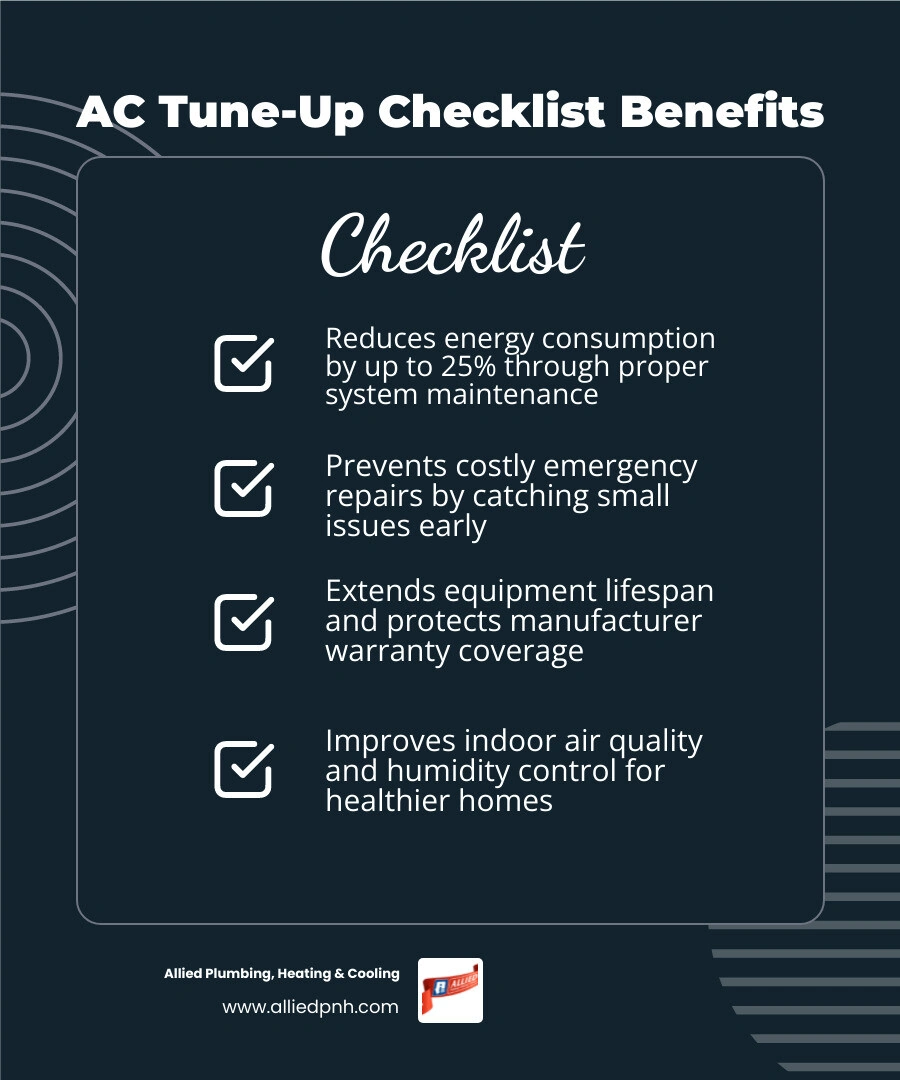
- Lower Energy Bills: Over time, dust, dirt, and wear restrict your system's efficiency. A neglected air conditioner has to work significantly harder to cool your home, dragging down performance and driving up your monthly utility bills. Routine maintenance restores your system to peak operating condition, which can lower your cooling costs by up to 25%.
- Extended System Lifespan: A properly maintained air conditioner can reliably last 15 to 20 years. On the other hand, neglected systems frequently suffer from premature compressor or motor failures, forcing homeowners into a replacement after only 10 to 12 years.
- Preserved Warranty Coverage: Most major HVAC manufacturers require proof of annual professional maintenance to keep their warranties valid. If a major component like your compressor fails, the manufacturer may deny your warranty claim if you cannot show documented proof of regular tune-ups.
- Preventing Unexpected Breakdowns: Almost all emergency summer repair calls trace back to minor issues — like a failing capacitor or a clogged drain line — that a technician would have caught during a standard spring inspection.
- Improved Indoor Air Quality and Humidity Control: According to the EPA, indoor pollutant levels can be two to five times higher than outdoor levels. Because we spend so much time indoors, a clean blower motor, pristine coils, and a fresh filter are crucial for keeping dust, pet dander, and mold spores out of our breathing air. Furthermore, a well-tuned AC is highly effective at pulling excess humidity out of the air, keeping your home feeling crisp and comfortable.
To learn more about preparing your system for the hot weather, check out our guide on Why Spring is the Best Time for System Tune-Ups. For tips on maintaining comfort throughout every season, see our article on AC Maintenance for Year-Round Comfort.
The Difference Between an AC Tune-Up and a Full HVAC Tune-Up
It is common to hear the terms "AC tune-up" and "HVAC tune-up" used interchangeably, but they actually refer to different scopes of work. Understanding the difference helps you schedule the right service at the right time.
An AC tune-up is a cooling-specific service. It focuses exclusively on the components responsible for cooling and dehumidifying your home. This service is ideally performed in the spring. It covers the outdoor condenser unit, the indoor evaporator coil, the refrigerant lines, and the cooling-specific electrical controls.
A full HVAC tune-up (or a dual-system maintenance plan) covers both your heating and cooling systems. For homes with a standard furnace and air conditioner, this usually involves two separate visits per year: a spring visit to prepare the AC and a fall visit to inspect the furnace. During a heating-specific tune-up, the technician focuses on gas connections, burners, heat exchangers, carbon monoxide safety testing, and flue venting.
If you have a heat pump, the system handles both heating and cooling. In this case, a bi-annual tune-up is essential because the reversing valve, compressor, and coils work year-round to keep you comfortable. For a complete look at seasonal checklists, explore our Spring HVAC and Plumbing Maintenance Checklist.
The Professional AC Tune Up Checklist: What Your Technician Should Check
When you hire a professional for an AC tune-up, you should expect a comprehensive, hands-on service that goes far beyond a quick visual inspection. A thorough, professional tune-up typically takes between 60 and 90 minutes. If a technician is in and out of your home in 20 minutes, they are likely cutting corners.
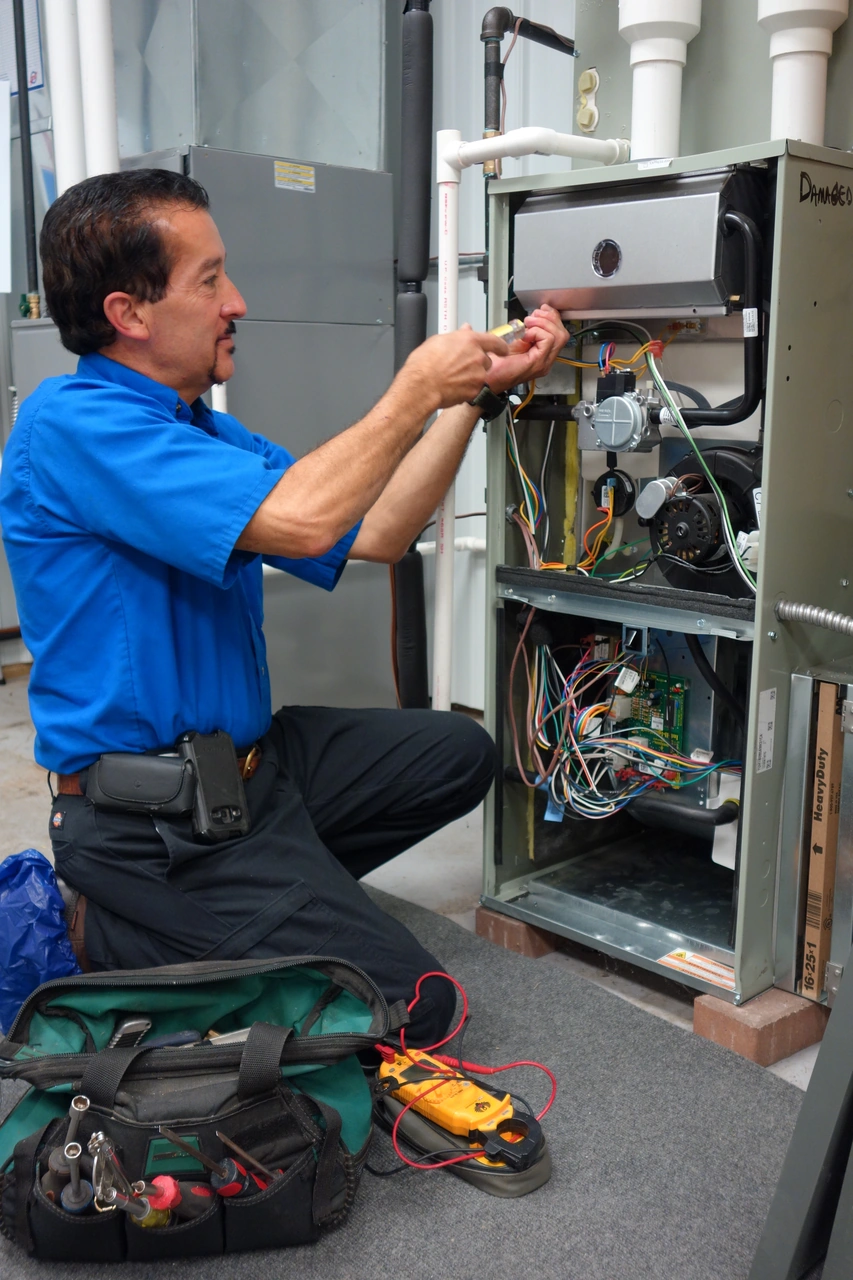
A true professional will use specialized diagnostic tools, such as digital gauges, multimeters, and static pressure probes, to assess your system's health. We highly recommend reviewing our AC Tune Up Guide for Springfield, Rochester, and Chatham Homeowners to understand how these diagnostics protect your equipment.
Below is the detailed breakdown of the essential items that must be checked during a high-quality professional maintenance visit.
Indoor Components: Part of the AC Tune Up Checklist What Your Technician Should Check
The indoor portion of your air conditioning system is responsible for absorbing heat from your indoor air and moving it outside. If these components are dirty or misaligned, your home's air quality and comfort will suffer. Here is what your technician should inspect inside your home:
- Evaporator Coil Inspection: The evaporator coil is where the actual cooling takes place. As warm air is blown across the cold coil, heat is absorbed by the refrigerant. If the coil is coated in dust or grime, it cannot transfer heat efficiently. This forces the system to run longer, wastes energy, and can cause the coil to freeze over.
- Blower Motor and Blower Wheel Assembly: The blower motor drives the fan that circulates conditioned air through your home. The technician should measure the motor's amperage and voltage to ensure it is operating within the manufacturer's specified limits. They should also inspect the blower wheel; a dirty blower wheel can reduce airflow by 20% to 30% and put severe mechanical strain on the motor.
- Air Filter Evaluation: While changing standard filters is a routine homeowner task, the technician will check the filter to ensure it is installed correctly and is not restricting airflow. They will also inspect the filter track for gaps that could allow unfiltered air to bypass the system.
- Condensate Drain Line and Overflow Safety Switch: As your AC cools the air, it also removes moisture. This water collects in a condensate pan and drains away. Algae, mold, and dust can easily clog this drain line, leading to water backups that can ruin your ceilings, walls, or floors. The technician must flush the drain line and test the overflow safety switch (or float switch), which is designed to shut down the system instantly if a backup is detected.
- Ductwork and Static Pressure Testing: Leaky or restricted ductwork can waste 20% to 30% of your conditioned air before it ever reaches your living spaces. The technician should perform a static pressure test, which measures the resistance to airflow within your ducts. High static pressure is like forcing your AC to "run with a heavy backpack on" — it wears out the blower motor prematurely and reduces cooling performance.
- Thermostat Calibration: Your thermostat is the brain of your HVAC system. The technician will verify that your thermostat is reading the temperature accurately and communicating correctly with your heating and cooling equipment. If you want to perform some basic troubleshooting on your own first, take a look at our guide on How to Check Your Thermostat Before Calling for Repair.
Outdoor Components: Part of the AC Tune Up Checklist What Your Technician Should Check
The outdoor unit, or condenser, is exposed to the elements year-round. It accumulates dirt, grass clippings, leaves, and cottonwood seeds, all of which block heat rejection. To ensure your outdoor unit is ready for the summer heat, your technician should focus on these key areas:
- Condenser Coil Cleaning: Dirty condenser coils can increase your system's energy consumption by up to 30% because the unit cannot reject heat efficiently. The technician should gently wash the outdoor coils to remove impacted dirt and debris.
- Refrigerant Charge and Leak Inspection: Your AC is a sealed system. Refrigerant is not "used up" like gasoline in a car. If your system is low on refrigerant, it means there is a leak. The technician should use digital gauges to measure superheat and subcooling, ensuring the charge is exactly to manufacturer specifications. If a leak is suspected, they should use electronic leak detection tools to locate the problem.
- Motor Capacitors Testing: Capacitors are electrical storage devices that provide the high-voltage boost needed to start and run the compressor and fan motor. Capacitors are the number-one cause of AC breakdowns during hot summer days. The technician must use a multimeter to measure the capacitor's microfarads. If the reading is below the manufacturer's rated limit, the capacitor should be replaced proactively before it fails and leaves you without cooling.
- Contactor Condition: The contactor is an electrical switch that receives signals from your thermostat to turn the outdoor unit on and off. Over time, the electrical contacts can become pitted, burned, or even welded together, which can damage your compressor.
- Compressor Amperage Measurement: The compressor is the heart of your AC. The technician will measure the compressor's startup and running amperage draw. If the compressor is drawing too much power, it may indicate mechanical wear or electrical issues that require immediate attention.
- Fan Blade Balance and Motor Inspection: The outdoor fan pulls air through the condenser coils. The technician should inspect the fan blades for balance, cracks, or debris, and verify that the fan motor is spinning freely and drawing the correct amperage.
- Refrigerant Lines and Insulation Integrity: The copper lines connecting your indoor and outdoor units must be inspected for physical damage, oil spots (which indicate refrigerant leaks), and deteriorated insulation. Missing insulation on the suction line can cause energy loss and condensation dripping.
For professional service that covers all of these points in detail, visit our dedicated page on AC Maintenance Springfield.
Professional vs. DIY: What Homeowners Can Safely Handle
Many homeowners wonder if they can perform an AC tune-up themselves to save time or money. While there are several important maintenance tasks you can — and should — handle on your own, a complete tune-up requires specialized tools, technical knowledge, and safety certifications.
Here is a breakdown of what you can safely do, versus what must be left to the professionals:
What Homeowners Can Safely Do (DIY):
- Replace or Clean Air Filters: This is the single most important task you can do to protect your AC. Check your filter monthly, especially during high-use summer months, and replace or clean it every 30 to 90 days.
- Maintain Outdoor Unit Clearance: Ensure there is at least two feet of clear space around your outdoor condenser unit. Trim back bushes, weeds, grass, and tree branches, and clear away any fallen leaves or debris.
- Keep Vents and Registers Unblocked: Walk through your home in Rochester or Chatham and make sure that furniture, rugs, or drapes are not blocking your supply or return air vents.
- Keep a Clean Condensate Line: You can periodically pour a cup of warm water or white vinegar down your condensate drain access point to help prevent algae and mold buildup.
What Requires a Professional Technician:
- Refrigerant Handling: Under federal law (EPA Section 608), only certified technicians are permitted to handle, measure, or adjust refrigerant levels. Working with refrigerant without proper training is dangerous and harmful to the environment.
- Electrical Diagnostics: Testing high-voltage capacitors, contactors, and compressor wiring poses a severe risk of electrical shock. Professionals use specialized safety equipment and calibrated multimeters to perform these tests safely.
- Deep Coil Cleaning: Cleaning delicate copper and aluminum fins on evaporator and condenser coils requires specialized chemical cleaners and correct water pressure. Incorrect cleaning can permanently damage the coils or bend the fins, restricting airflow.
For a deeper dive into what you can do at home to keep your system in top shape, check out our Summer AC Maintenance Checklist for Homeowners.
Sometimes, your air conditioner will give you clear warning signs that it is struggling. If you notice any of the following issues, do not wait for your annual tune-up — schedule professional service right away to prevent a complete system breakdown:
- Weak Airflow: If you feel very little air coming out of your vents, it could indicate a failing blower motor, a severely clogged filter, or blocked ductwork.
- Strange Noises: Squealing, grinding, rattling, or clicking sounds from either the indoor or outdoor unit are clear signs of mechanical or electrical wear.
- Frequent Cycling: If your AC turns on and off every few minutes (known as short-cycling), it is putting extreme wear on the compressor and wasting energy. This is often caused by airflow restrictions, thermostat issues, or an oversized unit.
- Unusual Odors: Musty smells can indicate mold growth inside your evaporator coil or ductwork. Burning smells point to electrical issues or overheating motors.
- Warm Air Blowing: If the air coming from your supply vents is warm or room temperature, your system may have a failed compressor, a refrigerant leak, or a broken capacitor.
If your system is showing any of these warning signs, our local teams are ready to help. Reach out to our experts for AC Service Chatham or schedule a diagnostic visit with our team for AC Service Springfield.
Frequently Asked Questions About AC Maintenance
How long does a professional AC tune-up typically take?
A comprehensive, professional AC tune-up typically takes between 60 and 90 minutes for a single system. This allows the technician enough time to establish an operating baseline, perform deep electrical tests, wash the outdoor coils, flush the drain line, inspect the indoor components, and provide you with a written performance report. If a technician claims to have finished a full tune-up in under 30 minutes, they likely skipped critical safety and efficiency checks.
Can skipping annual maintenance void my manufacturer warranty?
Yes, skipping annual maintenance can absolutely void your manufacturer's warranty. Most major HVAC manufacturers require documented proof of regular professional maintenance to keep their warranties active. If a major component like your compressor fails within the warranty period, the manufacturer may require you to submit service records from previous years before they will approve the replacement part. Keeping a record of your annual tune-ups is the best way to protect your warranty eligibility.
How often should I schedule an AC tune-up?
You should schedule a professional AC tune-up at least once a year. The ideal time to schedule this service is in the early spring, before the peak summer cooling season begins. This ensures your system is clean, safe, and running efficiently before the first heatwave hits. If you use a heat pump system for both heating and cooling, we recommend scheduling bi-annual maintenance — once in the spring for the cooling cycle, and once in the fall to prepare for winter heating.
Conclusion
Your home's air conditioner is a complex system that works tirelessly to keep your family cool and comfortable during our hot, humid summers in Springfield, Rochester, and Chatham. Making sure your technician covers every item on the ac tune up checklist what your technician should check is the best way to protect your investment, lower your energy bills, and prevent stressful, mid-summer breakdowns.
At Allied Plumbing, Heating & Cooling, we are a third-generation, family-owned business that has been proudly serving homeowners in Springfield, Rochester, and Chatham since 1977. We stand behind our work with our Daikin Comfort Promise and industry-leading 12-year warranties, giving you the ultimate peace of mind. Whether you need a simple spring tune-up, an urgent repair, or a complete system upgrade, our friendly, highly trained technicians are available 24/7 to keep your home comfortable.
Don't wait for the summer heat to catch you off guard. Schedule your professional AC maintenance in Springfield today!